Global industrial control system spare parts manufacturer
  • Triconex CM3201 Module: Performance and Benefits
    Triconex CM3201 Module: Performance and Benefits September 12, 2024
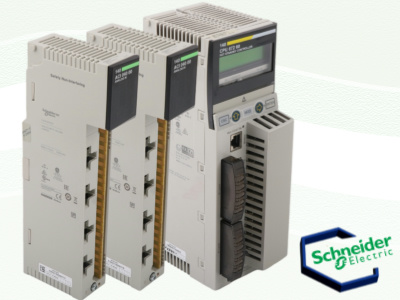
    Triconex CM3201 Communication Module Interfaces, Modbus master or slave, selectable RS-232/485 serial ports, TriStation, Triconex Peer-to-Peer,TSAA, and TCP-IP/UDP-IP The Communication Module (CM) is an optional, three-to-one interface to theMPs. Using a variety of communication methods, protocols, and physical mediatypes, the CM enables communication with:• External host computers• Distributed control systems (DCS) • Open networks • Network printer s• Other Trident systems • Tricon V9 systemsA single Trident controller supports up to two CMs on one CM Baseplate. EachCM operates independently and supports three RS-232/485 serial ports and twoEthernet ports. Two CMs can provide redundant communication connections oradditional independent communication ports. The CM Baseplate should be connected directly above or below an MP Baseplate. Two MP Interconnect Assemblies are required to connect the MP Baseplate to theCM Baseplate. Communication Capabilities Each CM provides the following communication capabilities: • Serial ports • Network ports • Protocol support Serial Ports Each CM provides three optically isolated RS-232/485 serial ports which are userconfigurable for Modbus point-to-point or multi-point (network) connections.Transmission rates up to 115 kilobits per second per port can be selected. Network Ports Each CM provides two network ports: • One 10-megabit Ethernet port, with two connectors: – 10BaseT– Attachment unit interface (AUI) for a 10-megabit media access unit(MAU) • One 100-megabit Ethernet port, with two connectors: – 100BaseTX – Media independent interface (MII) for a 100-megabit MAUMAUs may be used in place of the 10/100 BaseT RJ-45 twisted-pair connectionsto convert the CM network ports to other Ethernet media types or to extendnetwork distances. The Triconex CM3201 Communication Module is part of the Triconex safety systems used in critical applications for industries such as oil and gas, power generation, and chemical processing. It facilitates reliable and high-speed communication between the Triconex system and other systems or devices, ensuring the seamless transmission of data for monitoring and control purposes. Key Features: Redundant Configuration: Supports redundancy for enhanced reliability and system integrity. High-Speed Communication: Designed for fast data transfer to ensure real-time process monitoring. Protocol Support: Compatible with various communication protocols, enabling integration with different devices and networks. Secure Data Transfer: Ensures secure and accurate communication between safety controllers and external systems. Diagnostics: Provides built-in diagnostics for monitoring the health and status of the communication module. TRICONEX 9761-210 TRICONEX 7400210-010 TRICONEX 7400207-001 TRICONEX 8310 TRICONEX MP 3101 TRICONEX 3000510-180 TRICONEX 3601E TRICONEX 4000098-510 TRICONEX TCM 4355X TRICONEX 9674-810 TRICONEX 4201N TRICONEX 7400213-100 TRICONEX 3008N TRICONEX CM2201 7400206-100 TRICONEX ...
    More
  • T8111C Triple Modular Redundancy (TMR) Technology Explained
    T8111C Triple Modular Redundancy (TMR) Technology Explained September 11, 2024
    ICS Triplex T8111C Trusted TMR Processor The ICS Triplex  T8111C Trusted TMR (Triple Modular Redundancy) Processor is a high-performance, fault-tolerant processor used in critical control applications. It employs Triple Modular Redundancy (TMR) technology to ensure maximum reliability and safety. The T8111C features three independent processors that execute identical tasks in parallel. A majority-voting system compares the results from each processor to detect and correct errors, ensuring continuous operation even if one processor fails. This design is ideal for safety-critical environments such as power plants, oil and gas industries, and chemical processing facilities. Key attributes include high-speed processing, scalability, and robust diagnostics, which help prevent system downtime and maintain operational integrity. The ICS Triplex T8111C Trusted TMR Processor is a key component of the Trusted Triple Modular Redundant (TMR) system used in critical industrial applications requiring high reliability, such as safety instrumented systems (SIS). It utilizes three separate, parallel processor systems that independently execute instructions and perform diagnostics to ensure fault tolerance. Key Features: TMR Architecture: The T8111C is designed with triple modular redundancy, meaning it has three identical processors that execute in parallel. This ensures the system continues functioning even if one processor fails. High Availability: It provides high levels of system availability and reliability due to its fault-tolerant nature, making it suitable for safety-critical processes. Self-Diagnostics: Continuous self-checking and diagnostics to detect any faults within the system. If an error is detected in one processor, the other two take over seamlessly. Hot-Swappable: The processor module can be replaced without shutting down the system, ensuring continuous operation during maintenance. Communication: Supports high-speed communication interfaces, which can integrate with other control systems or safety systems. It offers various network options, including Ethernet, to ensure robust communication across devices. System Redundancy: In combination with other trusted modules, the T8111C can create a fully redundant, fail-safe system. Applications: Safety Instrumented Systems (SIS) Critical Control in Oil & Gas, Chemical, and Power Industries Emergency Shutdown Systems Fire & Gas Detection Systems Turbine and Compressor Control This processor is a core part of the Trusted TMR platform, designed to meet industry standards like IEC 61508 for functional safety.
    More
  • Applications of Schneider 140NOE77100 in Automation
    Applications of Schneider 140NOE77100 in Automation September 10, 2024
    Schneider 140NOE77100  The Schneider 140NOE77100 Ethernet network TCP/IP module is part of the Modicon Quantum automation platform and is designed for high-speed communication in industrial automation systems. Here’s a breakdown of its applications in automation: 1. Industrial Networking The module enables seamless integration of automation devices by providing Ethernet Modbus TCP/IP communication, allowing for real-time data exchange between various automation equipment, such as PLCs, HMIs, and SCADA systems. 2. Remote Monitoring and Diagnostics Through its web server capabilities and built-in diagnostics using predefined web pages, it provides remote monitoring and maintenance. The module allows engineers to access system status and perform diagnostics without being physically present on-site. 3. Data Management and Control The data editor and communication services like Modbus TCP messaging and I/O scanning ensure efficient data management, enabling faster response times in automation processes, enhancing control, and optimizing data flow. 4. High-Speed Communication The 140NOE77100 supports fiber optic (100BASE-FX) and twisted-pair Ethernet (10BASE-T/100BASE-TX) connections, offering flexible, high-speed communication in industrial environments with data transmission rates up to 100 Mbit/s. 5. Integration with Transparent Ready Concept It is aligned with Schneider's Transparent Ready concept, making it easier to connect industrial devices to the internet or enterprise systems, facilitating Industry 4.0 initiatives, and ensuring automation systems are ready for modern, interconnected applications.
    More
  • Performance Benefits of Honeywell FC-TSAI-1620M Module
    Performance Benefits of Honeywell FC-TSAI-1620M Module September 09, 2024
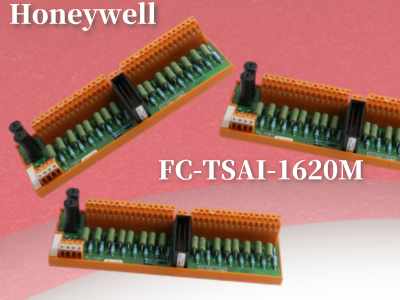
    Honeywell FC-TSAI-1620M The Honeywell FC-TSAI-1620M Analog Input Module is a high-performance input device designed for industrial control systems.  It is part of Honeywell's Experion or distributed control system (DCS) product family.  This module is used to interface and convert analog signals from various sensors and field instruments into digital data for system processing. Here are some of its key features and specifications: Key Features: High Channel Density: It provides multiple analog input channels, allowing integration of multiple sensor inputs into a single module. 16-bit Resolution: Ensures high accuracy and precision in signal conversion from analog to digital. Isolated Inputs: Each channel is electrically isolated, reducing interference and protecting the system from faults. Input Types: Supports a variety of input types, including current and voltage signals, commonly used in process control applications. Fault Detection: The module features diagnostic functions that can detect issues such as open circuits, providing greater system reliability. Technical Specifications: Number of Channels: 16 input channels Signal Types: 4-20 mA current, 0-10 V voltage Resolution: 16-bit Input Isolation: Channel-to-channel and channel-to-system isolation for enhanced safety Operating Temperature: Standard industrial range, typically -40°C to +70°C Communication Protocol: Designed to work within Honeywell's distributed control systems, ensuring seamless data exchange with the control system. Applications: Suitable for process industries like oil and gas, chemical, and power generation, where precise and reliable analog signal monitoring is required.
    More
  • Enhancing Turbine Efficiency with the GE IS215UCVGH1AC Control Card
    Enhancing Turbine Efficiency with the GE IS215UCVGH1AC Control Card September 06, 2024
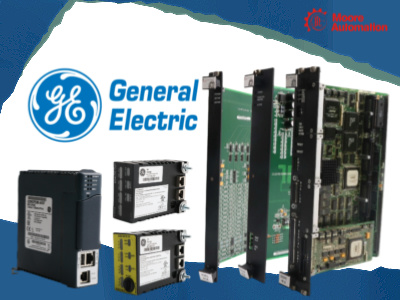
    The GE IS215UCVGH1AC Turbine Control Card is part of the Mark VI control system, developed by General Electric (GE) for gas and steam turbine applications. This control card is a VME (Versa Module Eurocard) single-board computer designed to handle crucial turbine control functions, ensuring optimal turbine operation and performance. Key Features and Functions: Processor and Memory: The IS215UCVGH1AC is equipped with a powerful processor that handles high-speed computations and real-time turbine control functions. It includes onboard memory (RAM) for fast data access and storage of operational data. Communication Interfaces: The card provides multiple communication ports (Ethernet, serial, and USB) for interaction with other system components. These interfaces enable data exchange between the controller and the I/O modules, operator interface, and plant management systems. It supports high-speed communication protocols to ensure real-time data processing, diagnostics, and control. Real-Time Operating System (RTOS): The card runs on a real-time operating system that ensures time-critical processes, such as monitoring turbine speed, temperature, and pressure, are handled promptly. I/O Management: The IS215UCVGH1AC acts as the main control interface for the turbine's sensors and actuators. It processes data from various sensors and sends control signals to the actuators to adjust fuel flow, blade position, and other key parameters. It ensures continuous monitoring and control of the turbine’s key performance indicators (KPIs), maintaining safety and efficiency. Redundancy and Reliability: Mark VI control systems, including the IS215UCVGH1AC, often employ redundant configurations to ensure high reliability and minimize downtime. If one control card fails, the backup controller takes over, reducing the risk of operational failure. Applications: Primarily used in gas and steam turbines, the IS215UCVGH1AC ensures precise control of the turbine's critical parameters. It is essential for industries like power generation, oil and gas, and other sectors that rely on reliable turbine performance. The card also plays a role in protection systems, monitoring abnormal conditions and initiating shutdown procedures if necessary. Diagnostics and Monitoring: The card includes self-diagnostic capabilities, allowing it to detect internal failures or issues in turbine operations. These diagnostics are crucial for preventive maintenance and reducing the chance of unexpected downtime. Benefits: High Performance: It ensures real-time monitoring and precise turbine control, leading to efficient and safe operation. Flexibility: Easily integrates into the Mark VI system, which can be scaled or adapted based on specific turbine requirements. Reliability: The redundancy and robust design of the IS215UCVGH1AC make it suitable for critical industrial environments where failure is not an option. The GE IS215UCVGH1AC Turbine Control Card is vital in maintaining optimal turbin...
    More
  • Bently Nevada 3500/22M 138607-01 Applications of the Transient Data Interface
    Bently Nevada 3500/22M 138607-01 Applications of the Transient Data Interface August 23, 2024
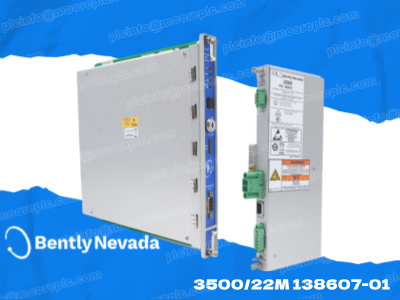
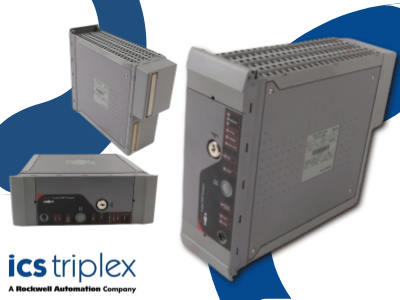
    Bently Nevada 3500/22M 138607-01 Transient Data Interface Module The 3500/22M Transient Data Interface (TDI) is the interfacebetween the 3500 monitoring system and compatiblesoftware (System 1 Condition Monitoring and Diagnosticsoftware and 3500 System Configuration software). The TDIcombines the function of a 3500/20 Rack Interface Module(RIM) with the data collection capability of a communicationprocessor such as TDXnet. The TDI resides in the slot adjacent to the power supplies of a 3500 rack. It interfaces with M series monitors (3500/40M,3500/42M, etc.) to continuously collect steady state andtransient dynamic (waveform) data and pass this datathrough an Ethernet link to the host software. Refer to theCompatibility section at the end of this document for moreinformation 3500/22M TDI Module and I/O 3500/22-AA-BB-CC A: Transient Data Interface Type01 Standard (use for standard monitoringapplications) B: I/O Module Type 01 10Base-T/100Base-TX Ethernet 02 100Base-FX (Fiber Optic) Ethernet 03 10Base-T/100Base-TX Ethernet withgold-plated OK Relay contacts 04 100Base-FX (fiber optic) Ethernet withgold-plated OK Relay contacts C: Agency Approval 00 None 01 CSA/NRTL/C (Class 1, Division 2) 02 Multi (CSA, ATEX, IECEx) Spares 288055-01 Standard Transient DataInterface Module with USB cable 123M4610* 10 foot A to B USB cable 146031-01 10Base-T/100Base-TX I/OModule 146031-02 100Base-FX (Fiber Optic) I/OModule 161580 3500/22M TDI Operation andMaintenance User Guide 164466 Network Accessories Datasheet 00580441 Connector header, internaltermination, 3-position, green 00580436 Connector header, internaltermination, 6-position, green 111M5777 Connector header, internaltermination, 2-position, green 166M2390 Connector header, push-inspring type (alternative for PN00580436) 166M4363 Connector header, push-inspring type (alternative for PN00580441) 146031-03 10Base-T/100Base-TX I/OModule GLD Plated Bently Nevada 140471-01 Prox/Velom I/O Module with Internal Terminations Bently Nevada 3500/15 3500/15  127610-01 Power Supply Module Bently Nevada 3500/22M 3500/22M  138607-01 Transient Data Interface Bently Nevada 3500/42M 3500/42M  176449-02 Monitoring Module Proximitor Seismic Monitor Bently Nevada 3500/33 3500/33 149986-01 Relay Module: 16-Channel Bently Nevada 3500/92 3500/92 136180-01 Communication Gateway Bently Nevada 3500/25 3500/25  149369-01 Enhanced Keyphasor Module Bently Nevada 3500/40M 3500/40M  176449-01 Proximitor Monitor Bently Nevada 3500/62 3500/62  163179-03 Process Variable Monitor Bently Nevada 3500/32M 3500/32M  149986-02 4-Channel Relay Module Sales Manager E-mail WhatsApp Skype Sandy plcinfo@mooreplc.com 86-18020776786 onlywnn_1
    More
  • Emerson A 6312 Speed and Key Monitor
    Emerson A 6312 Speed and Key Monitor August 17, 2024
    Emerson A 6312 Speed and Key Monitor The Speed and Key Monitor is designed for high reliability for the plant’s most criticalrotating machinery monitoring speed, phase, zero speed and direction of rotation.This 1-slot monitor is used together with the AMS 6500 monitors to build a completeAPI 670 machinery protection monitor. Applications include steam, gas, compressorsand hydro turbo machinery. The Speed and Key Monitor can be configured for redundant mode where automaticswitchover from primary to backup tach is possible. Sensor gap voltage and pulsecounting/comparison are monitored to trigger switchover. When the Speed andKey Monitor is operating in redundant mode, the main and failover key or speeddisplacement sensor must be installed in the same axial plane to ensure phasecontinuity upon failover. The AMS 6500 is an integral part of PlantWeb® and AMS software. PlantWeb providesoperations integrated machinery health combined with the Ovation® and DeltaV™process control system. AMS software provides maintenance personnel advancedpredictive and performance diagnostic tools to confidently and accurately determinemachine malfunctions early. „ Two-channel 3U size plug-in modulesdecrease cabinet space requirementsin half from traditional four-channel6U size cards „ API 670 compliant,hot swappable module „ Remote selectable limitmultiply and trip bypass „ Rear buffered proportionaloutputs, 0/4-20 mA output „ Self-checking facilities includemonitoring hardware, power input,hardware temperature, sensorand cable „ Use with displacement sensor 6422,6423, 6424 and 6425 and driverCON 011/91, 021/91, 041/91 „ 6TE wide module used inAMS 6000 19” rack mount chassis „ 8TE wide module used withAMS 6500 19” rack mount chassis Sales Manager E-mail WhatsApp Skype Sandy plcinfo@mooreplc.com 86-18020776786    onlywnn_1 EMERSON KJ2002X1-CA1 12P1509X092 EMERSON KJ3241X1-BA1 12P2506X062 EMERSON KJ1501X1-BC1 12P2186X032 EMERSON KJ3241X1-BA1 12P2506X042 EMERSON KJ3001X1-BG1 12P0557X162 EMERSON KJ3003X1-EA1 12P0921X042 EMERSON KJ3222X1-BA1 12P2532X092 EMERSON KJ3241X1-BA1 12P2506X062 VE4006P2 EMERSON KJ4001X1-BE1 12P0818X072 EMERSON KJ3204X1-BA1 12P3275X032 EMERSON KJ2221X1-EA1 12P3241X012 EMERSON SLS1508 KJ2201X1-BA1 12P3162X122 EMERSON KJ2201X1-BA1 12P3162X092 EMERSON SLS1508 KJ2201X1-BA1 12P3162X162 EMERSON KJ2221X1-BA1 12P3232X112 EMERSON KJ2002X1-CA1 12P1509X092 EMERSON KJ2201X1-HA1 12P3322X022 EMERSON KJ1501X1-BC1 12P2186X032 EMERSON KJ4001X1-NA1 12P3373X012 EMERSON KJ3001X1-BG1 12P0557X162
    More
  • Plug-and-Play Technology is Transforming Industrial Processes
    Plug-and-Play Technology is Transforming Industrial Processes August 09, 2024
    In today's fast-paced production world, it's more important than ever to be flexible, efficient, and quick to adapt.Plug and Play technology (PnP technology) is transforming how manufacturers integrate and utilise technology on the shop floor. Let’s explore use cases of plug and play technology and its applications across industries.As well as, weighing up its benefits and considerations for manufacturers. What is plug and play technology? In today's competitive landscape, manufacturers are constantly seeking ways to enhance efficiency and stay ahead of the curve.The adoption of new technologies is a key strategy, but it often comes with challenges. For smaller manufacturers, the financial burden of investing in cutting-edge technologies can be prohibitive.Even when the investment is feasible, the lack of in-house expertise to operate these technologies effectively can be a significant hurdle.To remain competitive and foster innovation, manufacturers must carefully consider the costs associated with adopting new technologies.Finding ways to integrate these advancements without overextending resources is crucial.By introducing the right level of automation, manufacturers can optimize their operations without the need for a complete system overhaul.This is where plug-and-play technology comes into play.Plug-and-play technology allows hardware and software systems to be seamlessly connected and configured without the need for complex setup procedures.This ease of integration enables manufacturers to add new devices,systems, and equipment to their existing infrastructure with minimal disruption. The benefits are clear: reduced setup times, minimized downtime, and enhanced operational efficiency.Plug-and-play technology is not just a convenience;it's a strategic enabler that allows manufacturers to keep pace with industry demands while maintaining the flexibility needed to adapt to future innovations. The Role of Plug-and-Play Technology in Modern Manufacturing In the evolving landscape of manufacturing, plug-and-play (PnP) technology plays a crucial role, particularly in the realms of automation and robotics. Automation and Robotics For today's advanced robotics and automation systems, PnP technology is indispensable. Collaborative robots, or cobots, are equipped with PnP interfaces that simplify programming and reconfiguration.This flexibility allows these robots to be easily adapted for different tasks, enhancing human-robot collaboration on the shop floor.The result is increased productivity and a significant reduction in the need for extensive programming and training. Flexible Assembly Lines Manufacturers are increasingly adopting modular assembly lines integrated with PnP components.These lines can be swiftly adjusted to handle different products or production methods.For example, automotive manufacturers like Bosch use modular conveyors and robotic arms with PnP capabilities.This setup allows for easy modifications to accommodate various vehic...
    More
1 ... 18 19 20 21 22 ... 37

A total of 37 pages

Let's work together
Stuck in a critical breakdown situation? Moore Automation provides a myriad of services to clients across the globe. Contact us today to find out how our experienced team can help you minimise downtime.
Contact Us

Leave A Message

Leave A Message
If you are interested in our products and want to know more details,please leave a message here,we will reply you as soon as we can.

Home

Products

whatsapp