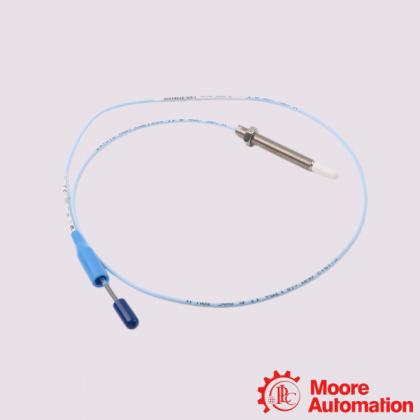
In today's fast-paced production world, it's more important than ever to be flexible, efficient, and quick to adapt.Plug and Play technology (PnP technology) is transforming how manufacturers integrate and utilise technology on the shop floor.
Let’s explore use cases of plug and play technology and its applications across industries.As well as, weighing up its benefits and considerations for manufacturers.
What is plug and play technology?
In today's competitive landscape, manufacturers are constantly seeking ways to enhance efficiency and stay ahead of the curve.The adoption of new technologies is a key strategy, but it often comes with challenges.
For smaller manufacturers, the financial burden of investing in cutting-edge technologies can be prohibitive.Even when the investment is feasible, the lack of in-house expertise to operate these technologies effectively can be a significant hurdle.To remain competitive and foster innovation, manufacturers must carefully consider the costs associated with adopting new technologies.Finding ways to integrate these advancements without overextending resources is crucial.By introducing the right level of automation, manufacturers can optimize their operations without the need for a complete system overhaul.This is where plug-and-play technology comes into play.Plug-and-play technology allows hardware and software systems to be seamlessly connected and configured without the need for complex setup procedures.This ease of integration enables manufacturers to add new devices,systems, and equipment to their existing infrastructure with minimal disruption.
The benefits are clear: reduced setup times, minimized downtime, and enhanced operational efficiency.Plug-and-play technology is not just a convenience;it's a strategic enabler that allows manufacturers to keep pace with industry demands while maintaining the flexibility needed to adapt to future innovations.
The Role of Plug-and-Play Technology in Modern Manufacturing
In the evolving landscape of manufacturing, plug-and-play (PnP) technology plays a crucial role, particularly in the realms of automation and robotics.
Automation and Robotics
For today's advanced robotics and automation systems, PnP technology is indispensable. Collaborative robots, or cobots, are equipped with PnP interfaces that simplify programming and reconfiguration.This flexibility allows these robots to be easily adapted for different tasks, enhancing human-robot collaboration on the shop floor.The result is increased productivity and a significant reduction in the need for extensive programming and training.
Flexible Assembly Lines
Manufacturers are increasingly adopting modular assembly lines integrated with PnP components.These lines can be swiftly adjusted to handle different products or production methods.For example, automotive manufacturers like Bosch use modular conveyors and robotic arms with PnP capabilities.This setup allows for easy modifications to accommodate various vehicle models, leading to a more efficient production process and significantly shorter setup times.
Condition Monitoring and Predictive Maintenance
PnP sensors and monitoring systems are revolutionizing maintenance practices.These systems can be seamlessly integrated into existing machinery, providing real-time data on equipment performance and condition.Companies like Dow Chemical leverage PnP sensors for predictive maintenance, enabling them to detect potential issues before they lead to equipment failure.This proactive approach reduces downtime and ensures a smoother, more reliable production process.Enhancing Warehousing and Maintenance with Plug-and-Play Technology
Plug-and-play technology is also making significant strides in warehousing applications.For instance, ProGlove, a manufacturer of wearables, has introduced the MARK, a hands-free scanner that eliminates the need for traditional handheld scanners in manufacturing facilities.The MARK scanner connects seamlessly to a tablet, enabling quick data sharing via barcodes.Its portability allows it to move with the operator, enhancing both accuracy and efficiency in the workflow.In the realm of maintenance, plug-and-play technology is also proving invaluable.Engineers can now install the MICA Industrial Internet of Things (IIoT) kit, developed by Bosch and Harting, to any machine to enhance condition monitoring.This kit can be retrofitted to legacy devices, allowing it to detect potential issues and immediately notify a maintenance engineer.This proactive approach ensures that engineers can contact their automation parts supplier and replace equipment before a failure occurs, minimizing downtime and maintaining operational continuity.
Advantages of Plug-and-Play Technology
Plug-and-play technology offers companies the ability to enhance the efficiency of their assembly lines without the need for costly system upgrades.These devices are exceptionally user-friendly, requiring no complex setup.They can be taken straight out of the box and integrated into the production line seamlessly, with no need for configuration or testing—they start working immediately.This technology also simplifies the process of adapting and maintaining production lines.Unplanned downtime can be a significant expense for manufacturers, especially when a specialized maintenance engineer is needed for repairs.By investing in plug-and-play devices, manufacturers can quickly unplug and replace malfunctioning equipment without the added cost and delay of hiring external engineers.This not only saves time but also reduces operational disruptions, making the production process more resilient and cost-effective.
Key Considerations for Implementing Plug-and-Play Technology
When implementing plug-and-play technology, it's essential to ensure that all parts and systems are standardized and compatible.This requires selecting equipment and software that adhere to industry standards and can seamlessly integrate with existing systems.While plug-and-play technology simplifies many aspects of manufacturing, workforce training remains crucial.Investing in training programs to upskill employees in handling new technologies and systems is key to fully realizing the benefits of PnP solutions.As production systems become increasingly interconnected, the need for robust cybersecurity measures grows.Protecting against cyber threats is vital for maintaining the integrity and security of production processes, safeguarding both valuable data and operational assets.

In Conclusion
You don’t always need the latest version of a product to benefit from the smartest and most effective technology.Plug-and-play technology is revolutionizing the manufacturing landscape, offering companies greater flexibility, cost savings, and enhanced productivity.Across various industries, businesses are experiencing the significant advantages that PnP technology brings.As more manufacturers adopt PnP solutions, those who make strategic investments in the right technologies will lead the way in shaping the future of manufacturing.Embracing these advancements is key to staying competitive and driving innovation in the industry.
Tel : +86 18030235313
Whatsapp & Wechat : +86 18030235313
Email : 849250460@qq.com
Email : plcsale@mooreplc.com



 1 Year Warranty