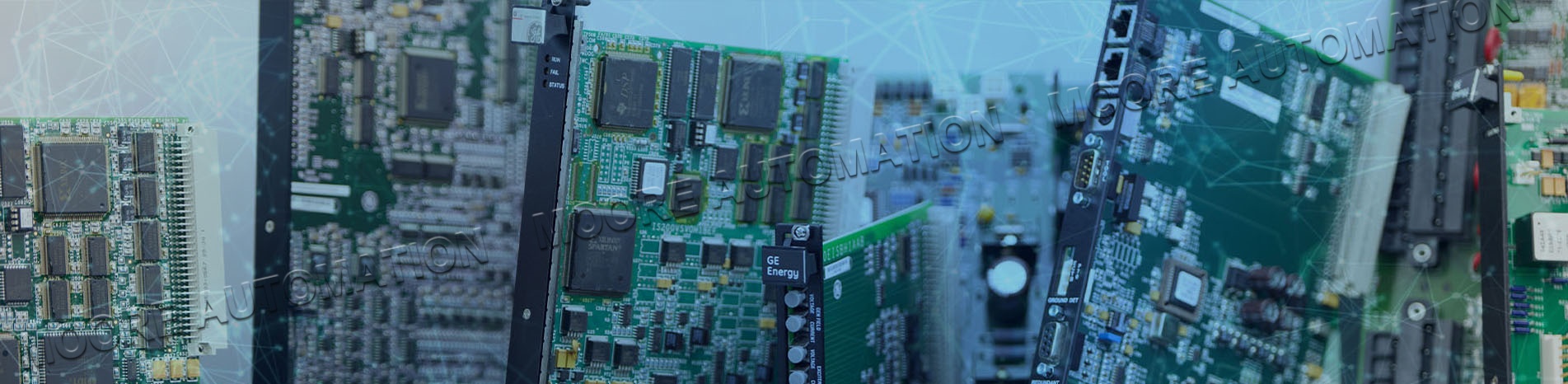
Programmable Logic Controllers (PLCs) have long served as the backbone of industrial automation, enabling precise control of machinery and manufacturing processes. However, as industries evolve toward "Industry 4.0" and demand greater efficiency, flexibility, and predictive capabilities, the integration of Artificial Intelligence (AI) into PLC systems is emerging as a transformative force. By combining the reliability of PLCs with the analytical power of AI, businesses can unlock unprecedented optimization opportunities across production lines, energy management, and equipment maintenance.
From Reactive to Proactive: AI-Driven Predictive Control
Traditional PLCs operate on pre-programmed logic, executing tasks based on fixed rules or sensor inputs. While effective for deterministic processes, this approach struggles with dynamic variables such as fluctuating raw material quality, equipment wear, or sudden environmental changes. AI algorithms—particularly machine learning (ML) models—can analyze historical and real-time data to predict optimal control parameters. For instance, reinforcement learning (RL) enables PLCs to autonomously adjust motor speeds, valve positions, or conveyor belt rates in response to changing conditions, minimizing waste and maximizing throughput.
A notable example is chemical batch processing, where AI-enhanced PLCs can dynamically recalibrate reaction times and temperatures based on real-time sensor data from viscosity or pH monitors. Siemens has reported a 12–18% reduction in energy consumption in such applications by deploying AI-optimized PLC logic.
Bridging the Data Divide: AI-Powered Anomaly Detection
Modern PLCs generate vast amounts of operational data, but conventional SCADA systems often lack the tools to interpret subtle patterns indicative of impending failures. Deep learning models, such as convolutional neural networks (CNNs) or autoencoders, can process multivariate time-series data from PLCs to detect anomalies with higher accuracy than threshold-based alarms. Rockwell Automation’s FactoryTalk Analytics platform, integrated with PLC systems, uses unsupervised learning to identify irregular vibrations in motors or pressure drops in pipelines days before traditional methods, reducing unplanned downtime by up to 30%.

Self-Optimizing Manufacturing Lines
AI’s ability to simulate and optimize complex systems is revolutionizing production line design. By training digital twins with PLC data, manufacturers can test "what-if" scenarios for layout changes or product variations. For example, automotive manufacturers like BMW use AI-driven PLC systems to autonomously reconfigure robotic welding paths when introducing new vehicle models, cutting reprogramming time from weeks to hours. Genetic algorithms further enhance this by iteratively refining control sequences to balance cycle times, energy use, and tool wear.
Energy Efficiency at the Edge
Industrial facilities consume over 40% of global energy, much of which is wasted due to suboptimal PLC configurations. AI models deployed directly on edge devices (e.g., Siemens SIMATIC S7-1500 with integrated AI accelerators) enable real-time energy optimization. A case study at a Nestlé bottling plant demonstrated that an AI-PLC system reduced compressed air usage by 22% by dynamically adjusting pneumatic actuators based on production demand forecasts and weather data.
Adaptive Safety Protocols
Safety PLCs (Safety Instrumented Systems) traditionally rely on rigid risk assessments. AI introduces adaptability: computer vision integrated with PLCs can detect unsafe human-machine interactions, while natural language processing (NLP) models analyze maintenance logs to predict safety-critical component failures. ABB’s SafeAI initiative combines PLCs with vision sensors to enforce dynamic safety zones around collaborative robots, improving both worker protection and operational flexibility.
Challenges and Future Directions
Despite its promise, AI-PLC integration faces hurdles:
Latency Constraints: Real-time control demands AI inference times under 10ms, necessitating lightweight models like TinyML.
Data Quality: Industrial datasets often contain noise or gaps, requiring robust preprocessing frameworks.
Explainability: Regulators and engineers need interpretable AI decisions, driving research into explainable AI (XAI) for control systems.
Emerging solutions include federated learning for privacy-preserving model training across factories and neuromorphic computing for energy-efficient AI at the edge. Standards bodies like IEC are developing guidelines (e.g., IEC 61131-3 extensions for AI function blocks) to streamline adoption.
Conclusion
The fusion of AI and PLC systems marks a paradigm shift from automated to autonomous industrial control. By harnessing predictive analytics, adaptive algorithms, and edge computing, businesses can achieve step-change improvements in productivity, sustainability, and resilience. As hardware and AI frameworks mature, intelligent PLCs will become the cornerstone of next-generation smart factories, driving the Fourth Industrial Revolution toward unprecedented efficiency horizons. Organizations that embrace this convergence today will secure a decisive competitive advantage in the age of AI-driven manufacturing.
Tags :
Tel : +86 18030235313
Whatsapp & Wechat : +86 18030235313
Email : 849250460@qq.com
Email : plcsale@mooreplc.com



 1 Year Warranty