Powder Bed Fusion: A Game-Changer in Additive ManufacturingFeb 26, 2025
Introduction As the field of Additive Manufacturing (AM) continues to evolve, Powder Bed Fusion (PBF) has emerged as a leading technology. More industries are turning to PBF to improve their design capabilities and streamline production. But what makes this technology so appealing? This article explores the fundamentals of PBF, its working mechanism, different variants, and its benefits for businesses.
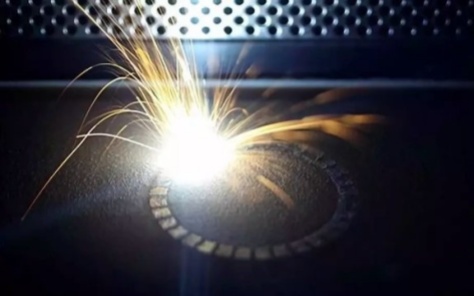
What is Powder Bed Fusion (PBF)? Among the many Additive Manufacturing technologies available today, Powder Bed Fusion (PBF) stands out as a versatile and highly efficient process. It utilizes a high-powered heat source—such as a laser or an electron beam—to selectively fuse powdered material layer by layer, forming intricate and robust components. This method enables manufacturers to create complex designs that would be impossible to achieve with traditional manufacturing techniques. PBF is widely used in sectors such as aerospace, medical, and automotive due to its ability to produce lightweight, high-strength parts. How Does PBF Work? PBF follows a meticulous layer-by-layer fabrication process: A thin layer of powder is evenly spread over a build platform. A focused heat source (laser or electron beam) selectively melts and fuses the powder in predetermined areas. Once the layer solidifies, the build platform lowers, and a new layer of powder is spread. This cycle repeats until the entire part is complete. The process is highly material-efficient, as unused powder can often be collected and reused for subsequent builds. This makes PBF an environmentally friendly choice compared to conventional manufacturing.
Variants of Powder Bed Fusion Powder Bed Fusion is not a single, uniform process. Several specialized variants cater to different materials and application needs: Selective Laser Sintering (SLS) SLS employs a laser to sinter thermoplastic polymer powders, such as nylon and polyvinyl chloride. It is widely used for prototyping and small-batch production due to its affordability, speed, and capability to create complex structures. This method is especially useful for industries needing rapid prototyping, as it enables the fabrication of durable and flexible components with minimal waste. Direct Metal Laser Sintering (DMLS) DMLS is similar to SLS but works with metal powders instead of polymers. It uses a lower-powered laser to fuse metal particles, resulting in robust and precise metal components. The lack of binder materials reduces post-processing requirements, making DMLS an ideal solution for high-precision industrial parts.
Electron Beam Melting (EBM) EBM utilizes an electron beam rather than a laser to melt metal powders. This process operates in a vacuum environment, which helps maintain material purity and minimizes internal stresses within the final part. Due to its ability to process materials like titanium alloys, EBM is commonly used for medical implants, aerospace components, and high-performance engineering parts. Is PBF the Right Choice for Your Business? If you are considering adopting Powder Bed Fusion in your manufacturing process, here are some key benefits that make it a viable choice: Optimized Material Usage PBF significantly reduces material waste since only the necessary powder is used. Additionally, leftover powder can be recycled for future builds, making it an environmentally sustainable option.
Unmatched Design Flexibility Unlike traditional manufacturing techniques, PBF allows for the creation of highly intricate and complex geometries. This is particularly beneficial for industries like aerospace and medical, where customized and lightweight designs are crucial.
Superior Mechanical Properties Parts produced through PBF exhibit excellent strength and durability, making them ideal for critical applications. Whether in the automotive, medical, or aerospace industry, manufacturers can rely on PBF to produce high-performance components.
Conclusion Powder Bed Fusion (PBF) is reshaping modern manufacturing by offering a cost-effective, efficient, and sustainable approach to producing complex parts. With multiple variants like SLS, DMLS, and EBM, businesses across various industries can leverage PBF to enhance productivity and innovation. If you’re looking to optimize your manufacturing process with state-of-the-art additive technology, PBF is a game-changer worth considering.
Stuck in a critical breakdown situation? Moore Automation provides a myriad of services to clients across the globe. Contact us today to find out how our experienced team can help you minimise downtime.



 1 Year Warranty