Introduction to AI in Manufacturing
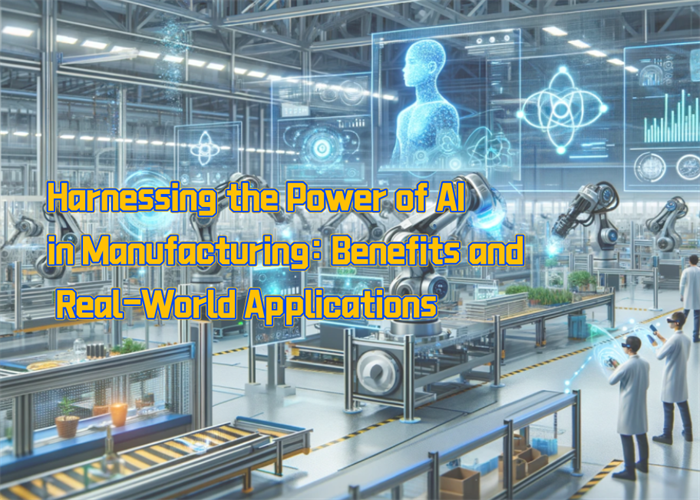
Artificial Intelligence (AI) is no longer just a futuristic concept; it is transforming the manufacturing landscape in real-time. By integrating AI into production processes, manufacturers can streamline operations, enhance efficiency, and reduce costs. From collaborative robots working side-by-side with humans to advanced predictive maintenance systems, the applications of AI in manufacturing are vast and varied. In this article, we'll explore how AI is reshaping the industry and examine some of the most impactful and practical applications.
Practical Applications of AI Across Industries
AI's practical applications in manufacturing span across various areas, each bringing its own set of innovations. Let's dive into some of the most notable examples:
1. Collaborative Robots in the Workplace
One of the most exciting developments in AI is the advent of collaborative robots (cobots). These robots are designed to work alongside humans, performing repetitive or dangerous tasks, while keeping workers safe. The food and beverage industry has particularly embraced this technology, where AI-powered robotic arms are used to handle delicate items like fruits or bottles on conveyor belts. These cobots are equipped with advanced sensors that ensure precise movements, minimizing the risk of damaging products while maximizing efficiency.
2. AI-Driven Quality Control in Automotive Manufacturing
AI is revolutionizing quality control in industries like automotive manufacturing. Audi, for example, has implemented an AI system at its Neckarsulm plant to inspect spot welds in car body construction. Previously, employees manually checked around 5,000 spot welds per vehicle, but with AI, this process has become highly automated. The AI system now inspects 1.5 million spot welds across 300 vehicles in a single shift, improving both efficiency and accuracy. The success of this initiative has led Audi to plan its expansion to other plants, demonstrating AI’s potential to enhance quality control across the automotive sector.
3. AI-Enhanced CNC Programming
CNC (Computer Numerical Control) machines are a staple in precision manufacturing, but programming them can be time-consuming and tedious. Enter AI-driven solutions like CAM Assist by Autodesk, which automates CNC programming. By reducing manual input and automating the creation of toolpath instructions, CAM Assist streamlines the programming process, allowing manufacturers to produce more parts in less time with greater accuracy. This innovation not only reduces labor costs but also boosts the overall efficiency of production.
The Future of AI in Manufacturing
As AI technology continues to evolve, its applications in manufacturing are expected to expand even further. Here are some emerging trends to watch for:
Lights-Out Factories: AI will enable fully autonomous factories that can operate without human intervention, often referred to as "lights-out" operations. These factories will run 24/7, with minimal human oversight, maximizing production efficiency.
Real-Time Error Detection: AI will continue to improve its ability to detect anomalies in the production process, identifying issues before they become costly problems.
Smarter Supply Chains: AI will also play a crucial role in optimizing supply chains by predicting demand, managing inventory, and even suggesting optimal procurement strategies.
As AI capabilities grow, manufacturers will have even more opportunities to enhance their operations, minimize costs, and stay ahead of the competition.
Conclusion: AI is Reshaping the Manufacturing Landscape
The practical applications of AI in manufacturing are vast and varied, from improving quality control in automotive production to optimizing energy generation in wind farms. By leveraging AI, manufacturers can achieve higher levels of efficiency, accuracy, and profitability. As AI technology continues to advance, its impact on the manufacturing industry will only increase, providing manufacturers with the tools they need to navigate future challenges and seize new growth opportunities.
AI is not a distant future—it's here today, transforming the way manufacturers operate. For companies looking to stay competitive, adopting AI-powered solutions is no longer optional but essential for thriving in the evolving industrial landscape.
Tags :
Tel : +86 18030235313
Whatsapp & Wechat : +86 18030235313
Email : plcsale@mooreplc.com



 1 Year Warranty