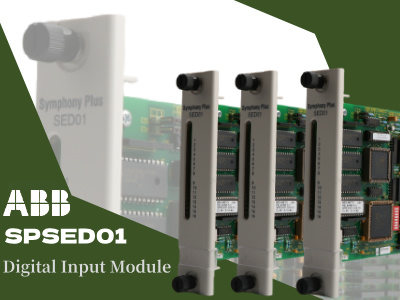
Introduction to ABB SPSED01 Digital Input Module In industrial automation and control systems, precise event logging and monitoring are essential. The ABB SPSED01 (also known as SED01) Sequence of Events Digital Input Module is designed to provide high-quality, real-time data acquisition from digital inputs. In this article, we will explore the features, functionalities, and benefits of the ABB SPSED01 module and its role in enhancing system reliability and performance. Key Features of the ABB SPSED01 Module The ABB SPSED01 digital input module is a state-of-the-art solution offering several key features that contribute to its functionality and reliability. Some of its notable attributes include: Sequence of Events (SOE) Logging: This module can accurately record and timestamp digital input events, providing a detailed chronological sequence of occurrences. This feature is critical for fault diagnosis and system analysis. High-Speed Data Acquisition: The SPSED01 ensures fast event logging, offering precise timing and high-resolution data capture for real-time monitoring. Robust Communication Protocol: It supports various communication protocols, enabling easy integration into different control systems and platforms. Compact and Efficient Design: The module is designed to be space-efficient, making it suitable for installation in environments where space is a premium. Applications and Use Cases The ABB SPSED01 Sequence of Events Digital Input Module is utilized in various industries where precise event tracking is crucial. Some common applications include: Power Generation Plants: The module is commonly used in power stations to monitor and log events from circuit breakers, relays, and other key equipment. Automation Systems: It plays a vital role in automation systems, ensuring accurate event sequencing for troubleshooting and predictive maintenance. Process Control Systems: In industries like chemical manufacturing and oil refining, the SPSED01 aids in process monitoring and helps detect anomalies or deviations from set parameters. How the ABB SPSED01 Enhances System Reliability One of the primary advantages of the ABB SPSED01 is its ability to enhance system reliability. By providing accurate timestamps and sequencing of events, the module allows for the following: Faster Fault Diagnosis: When an issue arises, having an event log helps operators quickly pinpoint the cause of the problem, reducing downtime and improving overall system uptime. Predictive Maintenance: With detailed event logs, maintenance teams can anticipate potential failures based on patterns observed in the data, enabling them to take preventive measures before a failure occurs. Data Integrity: The module’s robust design ensures that data is securely recorded, minimizing the risk of loss or corruption. Benefits of Using the ABB SPSED01 in Your System Incorporating the ABB SPSED01 Sequence of Events Digital Input Module into your system offers several compelling benefits: Impro...
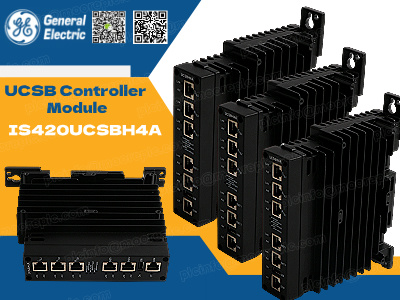
Introduction to the GE IS420UCSBH4A UCSB Controller Module The GE IS420UCSBH4A is a high-performance UCSB Controller Module designed as part of the Mark VIe Series, primarily used in gas turbine control systems. Powered by a 1066 MHz Intel EP80579 microprocessor, this controller ensures optimal execution of application codes while maintaining reliability and efficiency. Its advanced design and robust features make it an essential component in industrial automation and energy applications. Key Features of the IS420UCSBH4A UCSB Controller The IS420UCSBH4A UCSB Controller stands out with several advantages that enhance its functionality in demanding environments: Standalone Module: Unlike traditional controllers, the UCSB controller functions as a single module that mounts directly onto a panel. Built-in Power Supply: Eliminates the need for external power sources, simplifying installation. No Jumper Settings Required: Ensures hassle-free configuration and reduces the risk of errors during setup. Battery-Free Operation: Enhances longevity and minimizes maintenance requirements. Efficient Cooling System: Models such as UCSBSIA, UCSBHIA, and UCSBH4A operate without fans, while the IS420UCSBH3A model includes dual-redundant fans for enhanced cooling. Compact Design: Reduces the panel footprint, making it ideal for space-constrained environments. Flash Memory Updates: Allows convenient firmware upgrades to ensure the system stays up-to-date. Advanced Communication and Integration The IS420UCSBH4A UCSB Controller operates on a specialized onboard I/O network (IONet), which facilitates seamless communication with I/O packs. This private, high-speed Ethernet network is exclusive to Mark controls I/O modules and controllers, ensuring a reliable and interference-free connection. Unlike conventional controllers that require a backplane to host application I/O, the UCSB controller provides direct access to all I/O networks, improving system efficiency and response time. Operating System and Performance The UCSB Controller runs on the QNX Neutrino operating system, a real-time multitasking OS engineered for industrial applications. Known for its high-speed processing capabilities and reliability, QNX Neutrino ensures uninterrupted performance in mission-critical environments. By leveraging this OS, the IS420UCSBH4A delivers: Real-time data processing for enhanced operational efficiency. High reliability in demanding industrial applications. Multitasking support to handle multiple operations simultaneously. Installation and Mounting Considerations The UCSB Controller is designed for straightforward installation, directly mounting onto the sheet metal of an industrial panel. Key installation guidelines include: Ensuring the vertical airflow through the heat dissipation fins remains unobstructed. Adhering to the specified dimensional requirements to achieve a secure fit. Using appropriate mounting hardware to enhance stability and durability. By following these in...
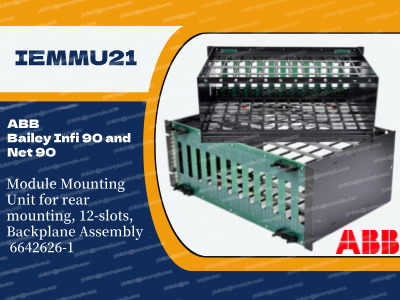
Key Features of the ABB Bailey IEMMU21 Module Mounting Unit The ABB Bailey IEMMU21 Module Mounting Unit plays a crucial role in industrial automation systems by ensuring reliable power distribution to various process control modules. This unit is designed to provide seamless operation and efficiency, making it a valuable component in power and control applications. Key features include: Reliable Power Distribution: Supplies +5, +15, -15, and +24 VDC to control modules and field termination devices. Scalable Power for Logic and I/O Functions: Supports modular power expansion for enhanced system performance. Shared Power Output: Ensures balanced distribution across all connected modules for system stability. How the ABB Bailey IEMMU21 Enhances System Performance The ABB Bailey IEMMU21 is part of the Infi 90 Modular Power System, which enhances industrial automation by providing a stable and redundant power supply. It is designed to work seamlessly with: Power Entry Panels: Manage incoming power and ensure proper voltage distribution. Fan Assemblies: Help maintain optimal operating temperatures for longevity. Bus Bars and Wiring: Ensure consistent electrical connectivity and reliability. By integrating these components, the IEMMU21 ensures uninterrupted power for control modules, reducing downtime and enhancing operational efficiency. The Role of N+1 Redundancy in Power Systems A standout feature of the ABB Bailey IEMMU21 is its N+1 redundancy capability. This redundancy mechanism plays a vital role in ensuring continuous operation, even in the event of a module failure. Here’s how it works: Equal Power Sharing: Power modules distribute the load evenly to optimize performance. Automatic Adjustment: If a module fails, the remaining modules compensate to meet the total system demand. Improved Reliability: Having one extra module beyond the minimum required ensures backup power and prevents system shutdowns. This redundancy system significantly enhances the reliability and resilience of industrial power supplies. Applications of the ABB Bailey IEMMU21 in Industrial Settings The ABB Bailey IEMMU21 is widely used in various industrial applications due to its robustness and reliability. Common applications include: Process Control Systems: Provides stable power to automation controllers and field devices. Manufacturing Plants: Supports machinery and automation processes to maintain smooth operations. Energy and Utility Sectors: Ensures continuous power supply for monitoring and control equipment. Oil and Gas Industry: Plays a key role in maintaining safe and efficient operations in remote locations. These applications highlight the module’s versatility in industrial automation and power distribution systems. Benefits of Implementing the ABB Bailey IEMMU21 Using the ABB Bailey IEMMU21 in industrial automation systems offers numerous benefits, including: Enhanced System Reliability: N+1 redundancy ensures uninterrupted operation. Efficient Power Management:...
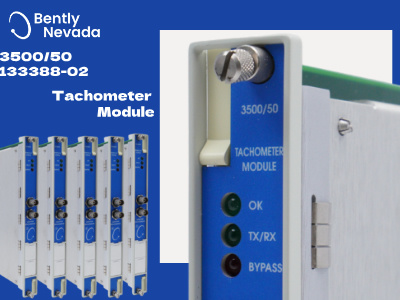
What is the Bently Nevada 3500/50 Tachometer Module? The Bently Nevada 3500/50 Tachometer Module is a highly reliable and versatile 2-channel module designed for monitoring and protecting rotating machinery. It accepts input signals from proximity probes or magnetic pickups to measure shaft rotational speed, rotor acceleration, and rotor direction. The module compares these measurements against user-programmable alarm setpoints and generates alarms when setpoints are exceeded. With its advanced configuration options, the 3500/50 Tachometer Module is an essential component for ensuring the safe and efficient operation of industrial equipment. Key Features of the 3500/50 Tachometer Module The 3500/50 Tachometer Module is packed with features that make it a standout choice for industrial applications: Dual-Channel Input: Accepts up to two transducer signals from proximity probes or magnetic pickups. Wide Input Signal Range: Operates within a range of +10.0 V to -24.0 V, with internal protection for signals exceeding this range. Multiple Configuration Options: Can be programmed for speed monitoring, setpoint alarming, speed band alarming, zero-speed notification, rotor acceleration alarming, and reverse rotation notification. High Accuracy: Offers a resolution of 0.3662 µA per bit with minimal error margins, ensuring precise measurements. Recorder Outputs: Provides +4 to +20 mA recorder outputs proportional to the module’s full-scale range (rpm or rpm/min). Applications of the 3500/50 Tachometer Module The 3500/50 Tachometer Module is widely used in industries that rely on rotating machinery, such as: Power Generation: Monitoring turbine speed and ensuring safe operation. Oil and Gas: Protecting compressors, pumps, and other critical equipment. Manufacturing: Safeguarding motors, conveyors, and other rotating assets. Aerospace: Testing and monitoring rotor systems. Its ability to detect reverse rotation, zero-speed conditions, and excessive acceleration makes it invaluable for preventing equipment damage and downtime. How to Configure the 3500/50 Tachometer Module The 3500/50 Tachometer Module is programmed using the 3500 Rack Configuration Software, which allows users to customize its operation based on specific needs. The module can be configured for: Speed Monitoring and Setpoint Alarming: Tracks rotational speed and triggers alarms when predefined limits are exceeded. Speed Band Alarming: Monitors speed within a specific range and alerts operators if the speed deviates. Zero-Speed Notification: Detects when the shaft stops rotating and notifies operators. Rotor Acceleration Alarming: Monitors rapid changes in speed and triggers alarms if acceleration exceeds safe levels. Reverse Rotation Notification: Detects and alerts operators if the shaft rotates in the wrong direction. Technical Specifications and Performance The 3500/50 Tachometer Module is designed for high performance and reliability. Key specifications include: Input Impedance: 20 kΩ (st...
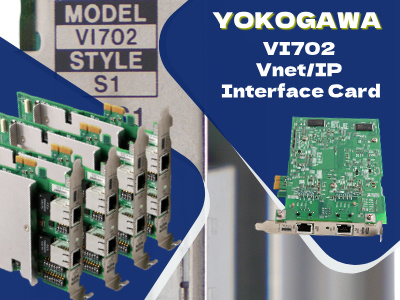
Introduction to the Yokogawa VI702 Vnet/IP Interface Card The Yokogawa VI702 Vnet/IP Interface Card is a high-performance networking component designed for industrial automation systems. It plays a crucial role in ensuring seamless communication within the CENTUM VP system, making it a vital tool for industries that rely on efficient data transmission and system integration. Whether you're managing a large-scale manufacturing plant or a complex process control system, the VI702 offers the speed, reliability, and compatibility needed to keep operations running smoothly. High-Speed Communication for Industrial Systems One of the standout features of the VI702 is its impressive communication speed of 1 Gbps in full-duplex mode. This ensures that data is transmitted and received simultaneously without bottlenecks, making it ideal for real-time industrial applications. The card supports CAT5e cables (Enhanced Category 5 cable) and complies with the 1000BASE-T standard, ensuring high-speed and reliable data transfer. With an RJ45 connector and a maximum transmission distance of 100 meters between the VI702 and a Layer 2 switch, this card is perfect for medium to large-scale industrial environments. PCI Express Compatibility and Installation The VI702 is designed to work with PCI Express slots, adhering to the PCI Express CEM Specification 1.0a. It supports x1 to x16 slots, providing flexibility for various system configurations. However, it’s important to note that this card is not compatible with traditional PCI slots. Its compatibility with modern PCI Express standards ensures that it can be easily integrated into current systems, offering a future-proof solution for industrial networking needs. Power Efficiency and Compact Design The VI702 operates on a power supply voltage of 3.3 V ± 9%, with a maximum current consumption of 2.5 A. Despite its powerful performance, the card is lightweight, weighing approximately 0.18 kg. Its compact design makes it easy to install and integrate into existing systems without taking up excessive space. This combination of power efficiency and portability makes the VI702 a practical choice for industrial applications where space and energy consumption are critical factors. Applications and Benefits in Industrial Automation The Yokogawa VI702 Vnet/IP Interface Card is widely used in industries such as oil and gas, chemical processing, and power generation. Its high-speed communication capabilities and compatibility with the CENTUM VP system make it an essential component for distributed control systems (DCS) and process automation. By ensuring reliable data transmission and seamless integration, the VI702 helps improve operational efficiency, reduce downtime, and enhance overall system performance. Conclusion The Yokogawa VI702 Vnet/IP Interface Card is a powerful and reliable solution for industrial communication needs. With its high-speed data transfer, PCI Express compatibility, and compact design, it is an excellen...
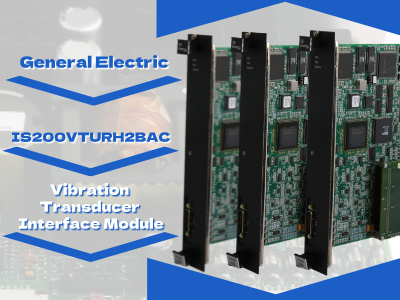
Overview of the GE IS200VTURH2BAC Module The GE IS200VTURH2BAC is a Vibration Transducer Interface Module designed and manufactured by General Electric as part of the Mark VI Series. This module plays a crucial role in GE Speedtronic Gas Turbine Control Systems, ensuring effective vibration monitoring and turbine protection. It operates within a voltage range of 125 V DC and has a common-mode voltage range of ±5V. With dimensions of 11.00 x 9.00 x 3.00 inches, it is engineered for optimal performance in environments with operating temperatures between 0 to 60°C. Key Features and Specifications The IS200VTURH2BAC module is built with robust features to enhance turbine control and monitoring. Some of its notable specifications include: Number of Analog Voltage Inputs: 6 Common Mode Voltage Range: ±5 V Board Rating: 125 V DC Operating Temperature Range: 0 to 60°C Compact Dimensions: 11.00 x 9.00 x 3.00 inches These features ensure reliability and efficiency in demanding industrial applications, making the module a vital component in gas turbine systems. Turbine Overspeed Protection Mechanism Overspeed protection is a critical function of the IS200VTURH2BAC module. It provides protection at three levels: Control Protection: Achieved through closed-loop speed control using fuel and steam valves. Primary Overspeed Protection: Handled by the controller, which processes shaft speed signals from the TTUR terminal board and VTUR I/O board. Emergency Overspeed Protection: In the event of a trip condition, the controller sends a trip signal to the TRPG terminal board through the VTUR I/O board. The system employs a 2/3 voting mechanism among three VTUR outputs to activate the necessary relay circuits, ensuring safe turbine shutdown when needed. Auto-Synchronization Algorithm The IS200VTURH2BAC module runs an advanced auto-synchronization algorithm that monitors and controls the synchronization of turbine generators. The algorithm functions by: Monitoring Two Potential Transformer (PT) Inputs: One from the generator and one from the bus. Calculating Phase and Slip Differences: This allows for precise turbine synchronization. Executing Breaker Closure Operations: When armed by the application code, the algorithm anticipates top center alignment and attempts breaker closure by energizing relay K25. Using Zero Voltage Crossing Technique: This method accurately calculates phase, slip, and acceleration, compensating for breaker closure time delays. The synchronization process is interrupt-driven and requires generator voltage to function efficiently. Configurable Settings and Adaptive Control One of the most notable aspects of the IS200VTURH2BAC module is its configurable settings, which allow for enhanced adaptability in turbine control systems. Users can configure: Breaker Closure Timing: The module compensates for time delays using self-adaptive control. Limit Adjustments: Configurable limits ensure precise and safe synchronization. Two Separate Breaker Managem...
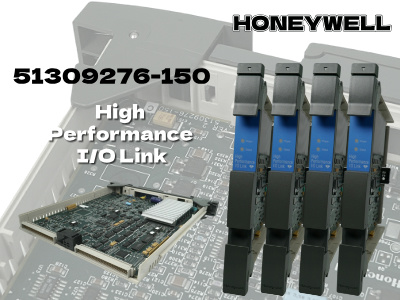
Introduction to Honeywell's MC-HPMRO1 51309276-150 Honeywell's MC-HPMRO1 51309276-150 High Performance I/O Link offers a versatile and efficient solution for systems that require robust and high-speed data communication. This I/O Link module is designed for industries that need to optimize data transfer between their equipment and controllers, ensuring seamless integration and operational efficiency. In this article, we explore the key features, benefits, and applications of this advanced I/O link module. Key Features of the Honeywell MC-HPMRO1 51309276-150 The Honeywell MC-HPMRO1 51309276-150 is equipped with several impressive features that make it a standout in the industrial automation world. Some of the most notable features include: High-Speed Data Transfer: The module supports fast and reliable data exchange, ensuring that operations run smoothly without delays. Flexible Integration: Compatible with a variety of Honeywell controllers and other industrial automation systems, making it adaptable to various applications. Durability and Reliability: Built to withstand demanding industrial environments, the module is designed for long-term use with minimal maintenance. Easy Configuration: The module allows for straightforward configuration, reducing setup times and ensuring a smooth installation process. Benefits of the Honeywell MC-HPMRO1 51309276-150 Investing in the Honeywell MC-HPMRO1 51309276-150 High Performance I/O Link comes with several advantages that improve system performance. These benefits include: Improved Data Accuracy: By enabling real-time data monitoring and quick responses, the module enhances the accuracy of operational data, leading to better decision-making. Reduced Downtime: The reliable performance of the I/O link ensures minimal disruptions, keeping your equipment running efficiently. Scalability: Whether you’re upgrading existing systems or designing new ones, the Honeywell MC-HPMRO1 offers scalability to meet the growing demands of your business. Applications of the Honeywell MC-HPMRO1 51309276-150 in Industries The Honeywell MC-HPMRO1 51309276-150 High Performance I/O Link is ideal for a wide range of industries. Here are some of the key areas where it excels: Manufacturing: Ensures seamless data flow between machines and controllers for optimized production lines. Process Control: Ideal for industries like oil and gas, chemical, and pharmaceuticals, where real-time data monitoring and control are essential. Energy and Utilities: Helps in the monitoring and control of power generation and distribution systems, ensuring efficient operation and minimal downtime. How to Integrate the Honeywell MC-HPMRO1 51309276-150 Integrating the Honeywell MC-HPMRO1 51309276-150 into your existing systems is a straightforward process. The module is designed for easy installation and configuration, ensuring that businesses can quickly implement it without disrupting ongoing operations. Key steps include: Step 1: Connect the I/O link t...
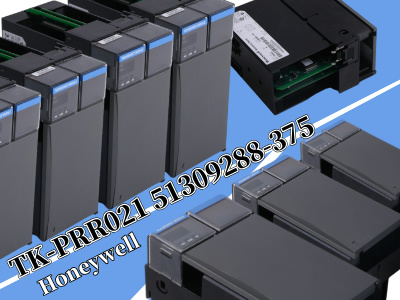
Introduction to the Honeywell TK-PRR021 Control Processor Module In the fast-paced world of industrial automation, reliability and performance are paramount. The Honeywell TK-PRR021 51309288-375 Control Processor Module is a vital component that addresses both needs. Designed specifically to support redundancy in control systems, this module plays an essential role in ensuring the smooth, uninterrupted operation of critical industrial processes. When integrated with advanced control systems like the C200 redundancy configuration, it provides seamless backup, increasing the overall resilience of the network. What is the Redundancy Module (RM)? The Honeywell TK-PRR021 comes equipped with a crucial feature – the Redundancy Module (RM). The RM is designed to prevent system downtime in the event of a failure by ensuring that backup pathways are available. This redundancy is vital in environments where continuous operation is a must, such as manufacturing plants, chemical plants, and other industrial settings. By maintaining an automatic switch between primary and backup systems, the RM ensures that operations are always up and running, even during faults or network issues. Seamless Integration with the C200E Control Processor One of the standout features of the Honeywell TK-PRR021 is its seamless integration with the C200E Control Processor. The module communicates over the I/O Control Network, ensuring that industrial control systems operate efficiently and without delays. By leveraging the advanced capabilities of the C200E processor, the TK-PRR021 enhances real-time control and monitoring, resulting in smoother operation and improved system performance. This integration is key to managing complex systems effectively, offering both speed and reliability. The Role of CIOM-A Modules in Control Systems CIOM-A modules play a significant role in enhancing the functionality of the Honeywell TK-PRR021 module. These modules work in tandem with the C200E processor to facilitate smooth communication and data flow. They are essential for handling input and output signals within the control system. By ensuring compatibility and seamless interaction with the TK-PRR021, the CIOM-A modules enhance the overall reliability and scalability of the entire control network. This synergy is especially beneficial in complex industrial environments, where efficient data management is critical. ControlNet Communication Protocol: The Backbone of Communication At the heart of the Honeywell TK-PRR021’s robust performance is its use of the ControlNet communication protocol. Developed by Rockwell, ControlNet is an open, high-speed, and reliable communication network that is well-suited for real-time industrial applications. The Honeywell TK-PRR021 operates over RG-6 coaxial cables, offering data transmission speeds up to 5 Mbps. The use of repeaters and fiber optics ensures that the network can be extended to cover larger industrial areas, maintaining both speed and reliability. ...
Stuck in a critical breakdown situation? Moore Automation provides a myriad of services to clients across the globe. Contact us today to find out how our experienced team can help you minimise downtime.



 1 Year Warranty